24, Ebun Street, Yaba. Lagos State. Nigeria
9:00am - 5:00pm
Opening Hours: Mon - Fri

A contract of carriage generally means just that, a contract of carriage. Carriage here meaning conveyance and transfer of goods and persons from a point hitherto agreed to another agreed point. Hence, a contract of carriage can be defined succinctly to be an agreement, oral or written, which while outlining parties' intention defines the carrier's rights and obligations to the consignor, consignee, passenger and the rights and obligation of the consignor, consignee, passenger to the carrier, spelling out each parties' liability in case of breach of terms and obligations contained in the contract.
Download PDF
The 2023 general election in Nigeria and the resulting petitions witnessed a remarkable surge in the participation of the younger generation in the political and electoral sphere, exacerbated by the ease of access and dissemination of information, often without an appreciation of the judicial process, practice and procedures, creating a disconnect between the average Nigerian and the judiciary. In light of these challenges, this article seeks to address the valuable lessons that could have been gleaned from the electoral and judicial process and the formidable obstacles and intricate steps involved in asserting claims within the realm of election petitions. Furthermore, the article explores the labyrinth of rules, practices, and procedures that serve as the guiding principles for both the election tribunal and the court. This article shall unravel the complexities of rules, laws, and practices that govern election petitions, the tribunals and the court. Ultimately, it is emphasized that triumph at the tribunals is not a matter of chance but a result of strategy and adherence to these established rules. In the grand tapestry of Nigeria’s democracy, it is not only about obtaining a return but also about skillfully navigating the intricate terrain of legalities and evidence to secure victory within the courtroom.
Download PDF
Nigeria, in depositing its instrument of ratification to the Rome Statute on 27 September 2001 vested the jurisdiction over Rome Statute crimes committed within its territory or by its nationals from 1 July 2002 onwards, on the International Criminal Court (ICC), but this jurisdiction of the ICC is subject to the principle of “Complementarity” as provided in the Rome Statute. This principle which supports the supplementary position of the ICC, deprives the ICC of jurisdiction where the State party to the Statute has either investigated, begun to investigate and/or prosecute Rome Statute crimes, where the national court has jurisdiction. The statute places the responsibility of determining if a situation meets the criteria required by the Rome Statute to warrant the ICC’s attention in terms of investigation and prosecution, on the Office of the Prosecutor (OTP). For the OTP to determine that a case deserves investigation, the alleged crime must be one under the ICC’s subject matter jurisdiction, it must have jurisdiction in light of the principle of complementarity, and the investigation must serve the interest of justice.
Download PDF
The rationale behind powers and functions separation is hinged on the principle that “when the legislative and executive powers are united in the same person, or in the same body of magistrates, there can be no liberty”. The 1999 Constitution of the Federal Republic of Nigeria provides for the powers and functions of the legislature, executive and the judiciary respectively, clearly distinguishing between their different functions and giving each a certain degree of control over the other while providing for their coordination and co-operation.
Download PDF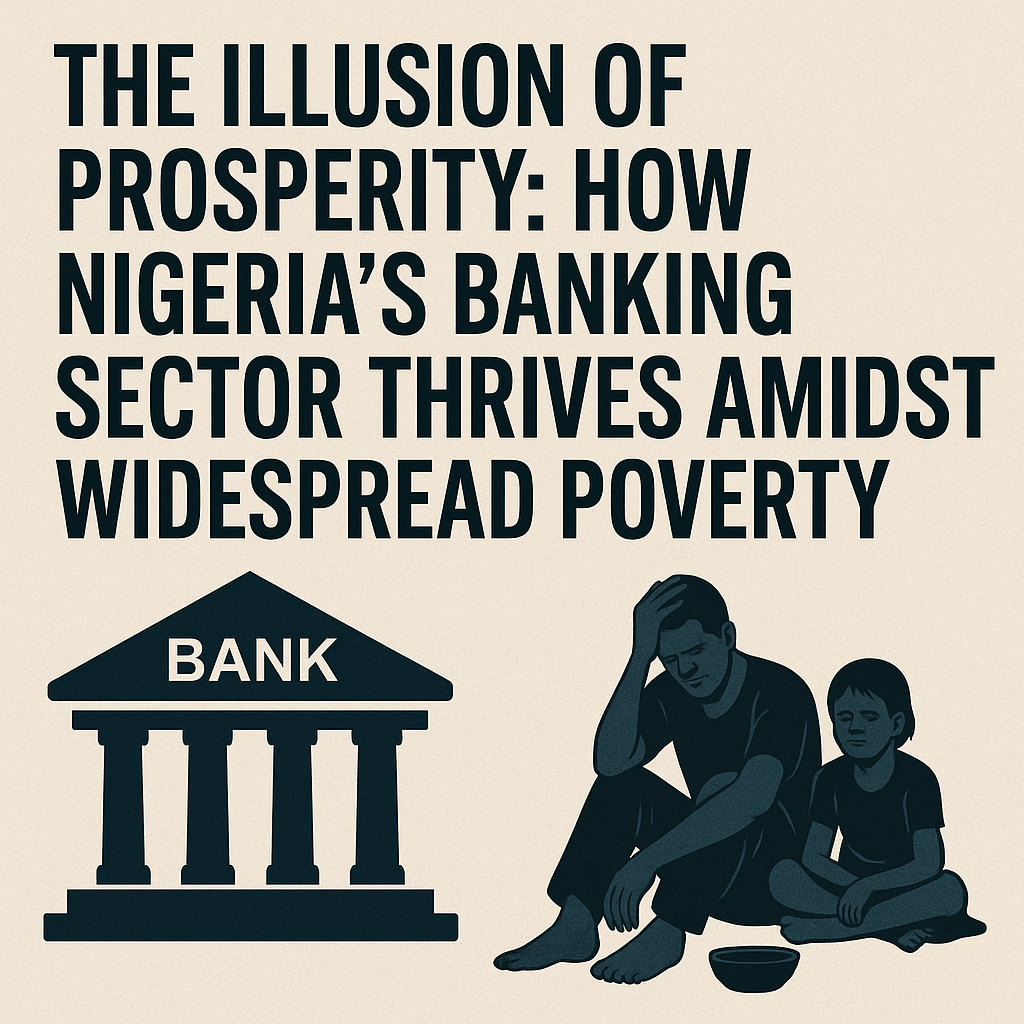
In the heart of Africa’s most populous nation, a striking paradox endures: Nigeria’s banking sector consistently posts record-breaking profits, yet the country remains plagued by abysmal poverty, low human development indices, and a struggling economy. Recent financial reports show that major banks such as Zenith Bank, GTCO, First Bank and Access Bank recorded multi-trillion naira profits in 2024, even as Nigeria was ranked as the country with the highest number of extremely poor people globally, surpassing India.[ World Poverty Clock, 2023]
Download PDF